Same-Day Service Available!

How to Clean an Area Rug at Home Without Ruining It in Florence, South Carolina is one of those searches people make right after something goes wrong. Maybe a pet had an accident. Maybe coffee spilled during a busy morning. Maybe the rug just started smelling “off,” and regular vacuuming isn’t cutting it anymore. We get it. Area rugs are usually in the most lived-in parts of the home, which means they take the most abuse.
The tricky part is that many rugs are not built like wall-to-wall carpet. Some have delicate dyes that can bleed. Others have natural fibers that shrink or stiffen when they get too wet. Even the rug backing can react badly to heavy water or the wrong cleaner. Meanwhile, Florence, South Carolina humidity can slow drying. When a rug stays damp too long, it can hold onto odors and feel rough or crunchy afterward. That’s usually when people say, “I cleaned it, but now it looks worse.”
Our team has been in the cleaning world for more than 30 years, and we’ve learned something simple: rug cleaning is safest when you use a controlled, quick-drying mindset and avoid over-wetting. That approach also fits a family-safe home. Rugs are where kids play, where pets nap, and where everyone walks barefoot. A clean rug should feel comfortable again, not sticky, stiff, or overly perfumed.
How to Clean an Area Rug at Home Without Ruining It in Florence, South Carolina gets much easier when you follow a process that focuses on four things: identifying the rug material, dry-removing grit, spot-treating with minimal moisture, and drying correctly. In addition, the “best” method changes depending on the rug. A washable synthetic rug is very different from a wool rug or a handmade rug.
This guide gives you a step-by-step plan you can follow without guessing. You’ll learn what’s safe vs what’s risky, plus exactly when it’s time to stop DIY and call a professional before damage happens. If you want to avoid dye bleeding, shrinkage, and that crunchy rug feel, keep reading. The step-by-step starts now.
How to Clean an Area Rug at Home Without Ruining It in Florence, South Carolina starts with one quick check. Look for a care tag on the back of the rug, the label on a corner, or any manufacturer notes. If there’s no tag, use the “best guess” approach based on fiber feel and structure.
Common rug types you may have:
Synthetic (polypropylene, polyester, nylon): often more DIY-friendly.
Wool: durable but sensitive to over-wetting and harsh chemistry.
Cotton: can shrink and can hold moisture longer.
Jute or sisal: water-sensitive and can stain or warp easily.
Handmade or antique: often dye-sensitive and higher risk for DIY.
If you suspect wool, handmade, or natural-fiber rugs, keep your method low-moisture and gentle. The IICRC notes that area rugs are often best cleaned under controlled conditions and that on-site cleaning should be handled carefully by trained professionals when in-plant cleaning isn’t an option.
What’s safe:
A small colorfast test in a hidden corner.
Gentle products and minimal moisture.
What’s risky:
Soaking the rug or using strong cleaners without knowing the fiber type.
Scrubbing aggressively, which can fuzz fibers and spread dye.
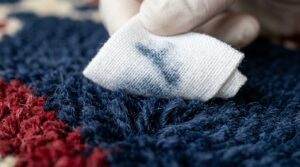
Even “mild” cleaners can cause color transfer on some rugs. Do a quick test:
Choose a hidden corner.
Dampen a white cloth with plain water.
Press and hold for 10 seconds, then lift.
Check the cloth for dye transfer.
If you see dye transfer, stop wet cleaning. Stick to dry methods and spot cleaning only, or schedule professional area rug cleaning. If you want a safer professional option locally, you can see how we handle rugs here in Florence, South Carolina.
What’s safe:
Testing with water first.
Using a white cloth so you can see transfer clearly.
What’s risky:
Skipping the test and finding out the hard way.
Using bleach or high-alkaline cleaners that can strip color.
A lot of rug “dirt” is dry soil. If you wet clean without removing it, you make mud. That mud can grind deeper into the fibers and make the rug look dull. Vacuuming is not just prep. It’s part of how to clean an area rug at home without ruining it.
Vacuum tips that protect rugs:
Vacuum both sides if the rug is light enough to flip.
Use slow passes and overlap your lines.
Avoid aggressive beater bars on delicate rugs, fringe, or looped fibers.
Use a soft brush attachment for fringe and edges.
Expert tip for Florence, South Carolina homes:
Entryway and living room rugs collect fine outdoor grit quickly, especially during rainy weeks. More frequent vacuuming reduces how often you need any wet cleaning.
What’s safe:
Gentle vacuum settings and a soft attachment where needed.
Cleaning the underside, because soil settles there too.
What’s risky:
High-agitation settings on delicate fibers.
Vacuuming fringe with a standard head and pulling threads loose.
Scrubbing is one of the fastest ways to ruin a rug’s texture. It can fuzz the fibers, spread stains, and push spills deeper. Instead, treat spots like this:
Blot with a clean towel to remove as much moisture as possible.
Apply a small amount of rug-safe cleaner to a cloth, not directly on the rug.
Press and blot from the outside of the spot toward the center.
Repeat with a clean section of cloth until transfer stops.
If the spill is fresh, the biggest win is speed. Fast blotting prevents the liquid from reaching backing and padding below.
What’s safe:
Cleaner applied to the cloth first.
Gentle blotting and patience.
What’s risky:
Pouring cleaner directly onto the rug.
Scrubbing in circles, which can distort the pile and spread dye.
Next, we’ll continue the step-by-step with how to do a low-moisture “surface wash” safely, how to rinse without soaking, how to dry the rug quickly in Florence, South Carolina humidity, and when it’s time to schedule professional help if odors or stains keep coming back.
How to Clean an Area Rug at Home Without Ruining It in Florence, South Carolina usually goes wrong when the rug gets too wet. Over-wetting can cause dye bleeding, backing issues, shrinkage, and a slow dry that leads to lingering odor. A low-moisture surface clean helps you refresh the rug without saturating it.
Here’s a safe approach:
Mix a small amount of rug-safe cleaner with water, following label directions.
Dampen a microfiber cloth or soft sponge. It should be damp, not dripping.
Wipe the rug in the direction of the pile, working in small sections.
Blot each section with a dry towel as you go.
If your rug is shag or has a thicker pile, keep the moisture even lighter and focus on spot cleaning rather than trying to wet the full surface.
What’s safe:
Small sections and controlled moisture.
Wiping with the pile and blotting dry immediately.
What’s risky:
Pouring solution onto the rug.
Working the rug “wet” and assuming it will dry out later.
A common reason rugs feel crunchy or attract dirt quickly is leftover soap. Residue can also create odor because it holds soil and oils. A light rinse helps, but you must keep it controlled.
Use this rinse method:
Fill a spray bottle with clean water.
Mist a small section lightly.
Wipe with a clean microfiber cloth to lift cleaner residue.
Blot with a dry towel to remove moisture.
This step is especially important if you used any detergent-based solution. The goal is a residue-free finish that won’t attract new dirt.
What’s safe:
Light mist rinse and immediate blotting.
Switching to clean cloths frequently.
What’s risky:
Flood rinsing with buckets of water.
Skipping rinse and leaving soap behind.
If the rug smells stale after a long season of use, you can refresh it without soaking. For mild odor:
Sprinkle a thin layer of baking soda across the rug.
Let it sit for several hours or overnight.
Vacuum slowly and thoroughly.
If odors are stronger and you suspect organic residue, use a rug-safe enzyme product only as a light mist and blot, then dry quickly. Avoid heavy perfumed sprays. They often mask odor briefly, then leave the rug smelling worse when mixed with soil and humidity.
What’s safe:
Baking soda used dry and vacuumed fully.
Enzyme products used lightly and followed by fast drying.
What’s risky:
Saturating the rug with deodorizer spray.
Using essential oils directly on fibers, which can stain and attract dirt.
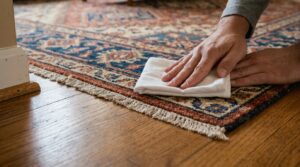
Drying is where Florence, South Carolina conditions matter. Humidity can slow the process, and slow drying is one of the biggest reasons rugs end up smelling worse after cleaning.
Use a quick-drying setup:
Move the rug to a well-ventilated space if possible.
Stand the rug up so air can reach both sides, or hang it over a sturdy railing that won’t transfer dye.
Aim a box fan across the rug surface.
Run your HVAC or a dehumidifier to reduce indoor humidity.
Flip the rug once during drying if it’s thick.
Avoid leaving a damp rug flat on hardwood or tile, because moisture can transfer and cause problems underneath.
What’s safe:
Airflow across both sides of the rug.
Keeping the rug elevated or repositioned to dry evenly.
What’s risky:
Leaving the rug damp on the floor overnight.
Placing it back in position before it is fully dry.
After the rug dries, some fibers may look flattened or slightly uneven, especially in traffic areas. Light grooming helps restore the look without damaging fibers.
Do this gently:
Use a soft brush designed for rugs or a carpet rake on low pressure.
Brush in the direction of the pile.
Avoid aggressive brushing on delicate rugs or fringe.
This step helps the rug look “finished” and can prevent weird drying patterns from showing up as shaded areas.
DIY rug cleaning is great for maintenance, quick spill response, and mild refreshes. However, it becomes risky when:
Dye transfers during your colorfast test.
The rug is wool, antique, handmade, or natural-fiber like jute.
There’s a strong pet odor or repeated accident history.
Stains keep returning, which can mean the backing or padding is involved.
The rug won’t dry quickly, or it smells musty after cleaning.
If stains or odors keep coming back, or if you’re worried DIY cleaning could over-wet the rug and cause damage, scheduling professional area rug cleaning can save time and protect your rug investment
If you want to see how we handle this locally, you can learn more or schedule online now.
Natural stopping point: Now that you have the complete 10-step process, the next section explains why professional rug cleaning can make rugs easier to maintain at home, including how it supports a fresher home feel, protects fibers and dyes, improves comfort, and helps prevent repeat stains and odors.

Area rugs cover a lot of the living space, which means they can influence how the whole room feels. When a rug holds onto dust, pet hair, and everyday residue, the room can feel stale even if the rest of the home is tidy. Professional rug cleaning helps remove built-up soil that holds odor. This is not a medical promise. It’s a comfort benefit. A cleaner rug often makes the room feel lighter, more inviting, and easier to keep up between deep cleans.
Rugs are an investment, and many are made with materials that react poorly to harsh DIY methods. Professional rug cleaning helps protect fibers by using controlled methods that remove soil without damaging the pile. It also helps protect color because dye-sensitive rugs need careful handling to avoid bleeding and fading. When fibers stay in better condition, rugs look better longer and hold up better in high-traffic areas.
Rugs often sit in the busiest parts of Florence, South Carolina homes, such as living rooms, bedrooms, and entryways. When a rug is deeply cleaned, it can look brighter, feel softer, and sit flatter. That improves comfort because the rug feels cleaner underfoot and looks more consistent, especially in traffic lanes where dullness tends to show first.
One of the biggest benefits is reducing repeat work. When soil is removed more thoroughly and residue is minimized, rugs stay cleaner longer and are easier to maintain with routine vacuuming. That means fewer emergencies, fewer “scrub sessions,” and more confidence that your rug won’t get ruined by repeated DIY attempts. This is often what homeowners are really after when they search How to Clean an Area Rug at Home Without Ruining It in Florence, South Carolina.
Next, we’ll move into a pro tips and home care guide for Florence, South Carolina families, including how to prevent stains, how often to refresh different rug types, what product habits to avoid, and how to keep your rug looking great between professional cleanings.
How to Clean an Area Rug at Home Without Ruining It in Florence, South Carolina becomes easier when you reduce how often the rug needs wet cleaning at all. The biggest day-to-day culprit is grit. Fine dirt works like sandpaper inside the rug pile. It dulls the look, it makes fibers feel rough, and it can hold odors because soil traps oils and residue.
A practical schedule helps. In high-traffic areas like living rooms and entryways, vacuum 2–4 times per week. In bedrooms or lower-traffic rooms, once a week is often enough. Use slow passes and overlap your lines, because quick vacuuming doesn’t lift embedded dust. If your rug is delicate or has fringe, switch to a soft brush attachment for edges and vacuum fringe gently by hand. Also vacuum the underside occasionally if the rug is light enough to flip. Dirt settles down through the pile, and cleaning only the top leaves a lot behind.
This routine helps you avoid aggressive scrubbing later, which is one of the main ways people accidentally ruin a rug at home.
A lot of rug damage starts with a single spill that got over-wet. Once liquid reaches the backing, you risk lingering odor, slow drying, and stains that wick back up later. For How to Clean an Area Rug at Home Without Ruining It in Florence, South Carolina, speed matters, but moisture control matters even more.
Blot immediately with clean towels and keep blotting until the towel stops picking up moisture. Then apply a small amount of rug-safe cleaner to a cloth, not directly to the rug. Press and blot from the outside toward the center to prevent spreading. After that, use a clean damp cloth to lightly rinse the area, then blot dry again. Finish with airflow. Set a fan across the rug surface until it’s fully dry.
If a stain keeps returning in the same spot, it often means the spill reached deeper layers. That’s when professional area rug cleaning is safer than repeating DIY wetting.
Rugs wear unevenly because rooms have traffic lanes. Sunlight and furniture placement also create uneven fading and crushing. Rotation is one of the easiest ways to protect your rug’s appearance and reduce the need for heavy cleaning.
Rotate the rug every 3–6 months, especially in living rooms. If one edge sits near a sliding door or sunny window, that section takes more stress. A rug pad also helps by reducing movement and friction. Less movement means less fiber wear, fewer wrinkles, and less dirt grinding into the pile.
For Florence, South Carolina homes, rug pads help in another way too. They can improve airflow under the rug, which supports faster drying if the rug ever gets lightly cleaned or spot treated.
Many people ruin rugs with good intentions. The most common mistakes are using too much water, scrubbing aggressively, using strong household cleaners, and skipping rinsing. Too much soap can leave residue that attracts dirt and makes the rug feel crunchy. Strong cleaners can strip dye or damage natural fibers.
Keep it simple:
Use products labeled safe for rugs, and keep the amount minimal.
Always do a colorfast test first.
Blot instead of scrubbing.
Rinse lightly and remove moisture immediately.
Dry fast with airflow.
For additional best-practice guidance on on-site rug care and risk factors like dye bleeding and backing issues, the IICRC shares a helpful tip sheet for onsite area rug cleaning. It reinforces the idea that controlled methods and careful handling protect rugs from avoidable damage.
A smart schedule keeps rugs looking great without constant deep cleaning. Many families do well with routine vacuuming and quick spot response, then a deeper refresh as needed based on traffic and pets. If your rug is in a high-use space, a periodic professional cleaning helps remove embedded soil and reduce residue buildup that home methods can’t fully reach.
A gentle scheduling reminder: if your rug has strong odor, repeated pet accidents, dye sensitivity, or it simply won’t dry quickly in Florence, South Carolina humidity, it’s safer to schedule professional help rather than risk shrinking, bleeding, or backing damage. If you want a reliable option, you can book now and our local team can guide you toward the best care for your specific rug.
Natural stopping point: Now that you have a long-term care plan, the next section explains the Safe-Dry difference here in Florence, South Carolina, including how our quick-drying mindset and careful process help protect rug fibers, color, and comfort while delivering consistent results.
How to Clean an Area Rug at Home Without Ruining It in Florence, South Carolina is easier when you respect how rugs are built. Rugs can have different fibers, different dye types, and different backing materials. Our approach starts with careful evaluation, because one rug may tolerate a gentle rinse while another needs a strictly low-moisture method. We adjust to the rug, not the other way around.
Moisture is the biggest risk factor for DIY rug cleaning. Too much water can lead to slow drying, odors, texture changes, or backing issues. We keep a quick-drying mindset by controlling moisture and focusing on thorough removal, not saturation. That helps rugs return to normal faster and helps prevent the musty smells that can show up when rugs stay damp too long.
Our company story is rooted in long-term service, strong values, and taking care of customers the right way. We bring that same mindset into Florence, South Carolina homes by focusing on practical, family-safe methods that support comfort and cleanliness. Rugs are where families gather, kids play, and pets nap. A professional clean should make the rug feel comfortable again, not leave it sticky or stiff.
Rug cleaning can feel risky because people worry about shrinkage, color bleed, or damage. We understand that, and we aim to make the process clear and stress-free. We communicate what we see, explain what methods are safest for your rug, and share simple home care guidance so you can keep results longer. If you’re tired of guessing and want a professional reset, you can learn more about our area rug cleaning here.
Next, we’ll answer the most common Florence, South Carolina questions about cleaning rugs at home, including what to do for pet odors, how to handle wool and natural-fiber rugs, the safest DIY products, drying time expectations, and when to schedule professional cleaning to protect your rug.
How to Clean an Area Rug at Home Without Ruining It in Florence, South Carolina starts with understanding risk. Rugs that are synthetic and have a clear care label are usually safer for light DIY cleaning. Rugs that are wool, handmade, antique, cotton, jute, or sisal can be more sensitive to moisture and chemistry. The simplest test is a colorfast test. Dampen a white cloth with water and press it on a hidden corner for 10 seconds. If dye transfers, avoid wet cleaning. Also consider thickness and backing. Thick rugs and rugs with rubber or glued backings can trap moisture and dry slowly in Florence, South Carolina humidity, which increases the chance of odor or warping. If your rug has strong odor, repeating stains, or no care info and you’re unsure of fiber type, professional cleaning is often the safest route. When the goal is to avoid shrinkage and color bleeding, it’s better to be cautious than to risk damage.
The safest method is low-moisture and section-based. Start with thorough vacuuming on both sides if possible. Then treat spots with a blot-first approach using a rug-safe cleaner applied to a cloth, not poured on the rug. For a light refresh, wipe small sections with a barely damp microfiber cloth in the direction of the pile, then blot dry immediately. Follow with a light rinse mist using clean water and wipe again, then dry quickly with fans. Avoid soaking, steam saturation, and harsh scrubbing. In Florence, South Carolina, drying is critical because humidity can slow it down. Airflow across the rug surface and, if possible, airflow to the underside helps prevent musty smells. This controlled method keeps the rug from becoming waterlogged and protects both fibers and backing.
Sometimes, but it depends on the rug. Many machines use more water than rugs can safely handle, and over-wetting is one of the easiest ways to ruin a rug at home. For How to Clean an Area Rug at Home Without Ruining It in Florence, South Carolina, a machine can be risky for wool, handmade, natural-fiber, or dye-sensitive rugs. Even with synthetic rugs, machines can leave excess moisture trapped in thick piles or in the backing, especially in humid conditions. If you use a machine, use minimal solution, avoid repeated passes that soak the rug, and focus on extraction. Drying must be fast, with fans and airflow. If you notice dye transfer, strong odor, or slow drying, stop and switch to a low-moisture method or schedule professional cleaning. Machines can be helpful for some rugs, but they are not a one-size-fits-all tool.
Pet odor removal depends on whether the odor is surface-level or has reached the backing. Start by vacuuming thoroughly to remove hair and dander. For mild odor, use a thin baking soda layer, let it sit for several hours, then vacuum slowly and completely. For stronger odor, use a rug-safe enzyme product as a light mist and blot, not a soak. Dry quickly with fans, because moisture plus organic residue can create lingering smell if drying is slow. In Florence, South Carolina, humidity makes fast drying even more important. If the odor keeps returning, it may be in the backing or padding under the rug, and DIY surface cleaning won’t fully solve it. In that case, professional area rug cleaning is safer and more effective than repeated wetting that risks damage.
Drying time depends on rug thickness, fiber type, how much moisture was used, and indoor humidity. In general, rugs should dry as quickly as possible to avoid odor and texture issues. In Florence, South Carolina, humidity can extend drying time, especially in thick rugs or rugs cleaned with too much water. Use fans aimed across the rug, run HVAC or a dehumidifier, and position the rug so air can reach both sides. Avoid leaving a damp rug flat on the floor for long periods. If the rug still feels cool or damp hours later, it likely needs more airflow or it was over-wet. Slow drying is one of the main reasons rugs end up smelling musty or feeling stiff after DIY cleaning.
Avoid bleach, strong alkaline cleaners, and harsh degreasers unless the rug label specifically allows them. Avoid DIY mixes that are too acidic or too concentrated, especially if you’re not sure about the rug fiber. Also avoid heavy shampooing products that leave residue, because residue attracts dirt and can make rugs look dull faster. Strong fragrance sprays can also create lingering odor mixes and can attract soil if they leave a sticky film. For How to Clean an Area Rug at Home Without Ruining It in Florence, South Carolina, safer choices are rug-specific cleaners used in small amounts, followed by controlled rinsing and quick drying. Always spot test first and stop if you see color transfer.
Schedule professional cleaning when the rug is high risk or the problem keeps returning. High-risk rugs include wool, handmade, antique, and natural-fiber rugs like jute or sisal. Also schedule professional help when you see dye transfer during testing, when pet odor persists, when stains keep wicking back, or when the rug won’t dry quickly in Florence, South Carolina humidity. Professional cleaning is also a smart move if you want to protect the rug’s shape and color long term. If you’re unsure what type of rug you have, it’s safer to schedule a professional evaluation than to risk over-wetting or using the wrong product.
How to Clean an Area Rug at Home Without Ruining It in Florence, South Carolina is all about controlled steps. Identify the rug type, do a colorfast test, remove dry soil thoroughly, treat spots with a blot-first method, and keep moisture low. Rinse lightly to prevent sticky residue, then dry the rug quickly with airflow so it doesn’t hold odors or lose its shape. These habits protect color and fibers while helping the rug feel comfortable again.
Some rugs and situations need more than DIY care. If you have a wool or handmade rug, repeated pet odor, stains that return, or any sign of dye bleeding, professional cleaning is the safer choice. If you want reliable results without risking damage, schedule an appointment with Safe-Dry Carpet Cleaning of Florence, South Carolina today. We’ll help you get a cleaner rug with a quick-drying approach that fits your home and protects your investment.