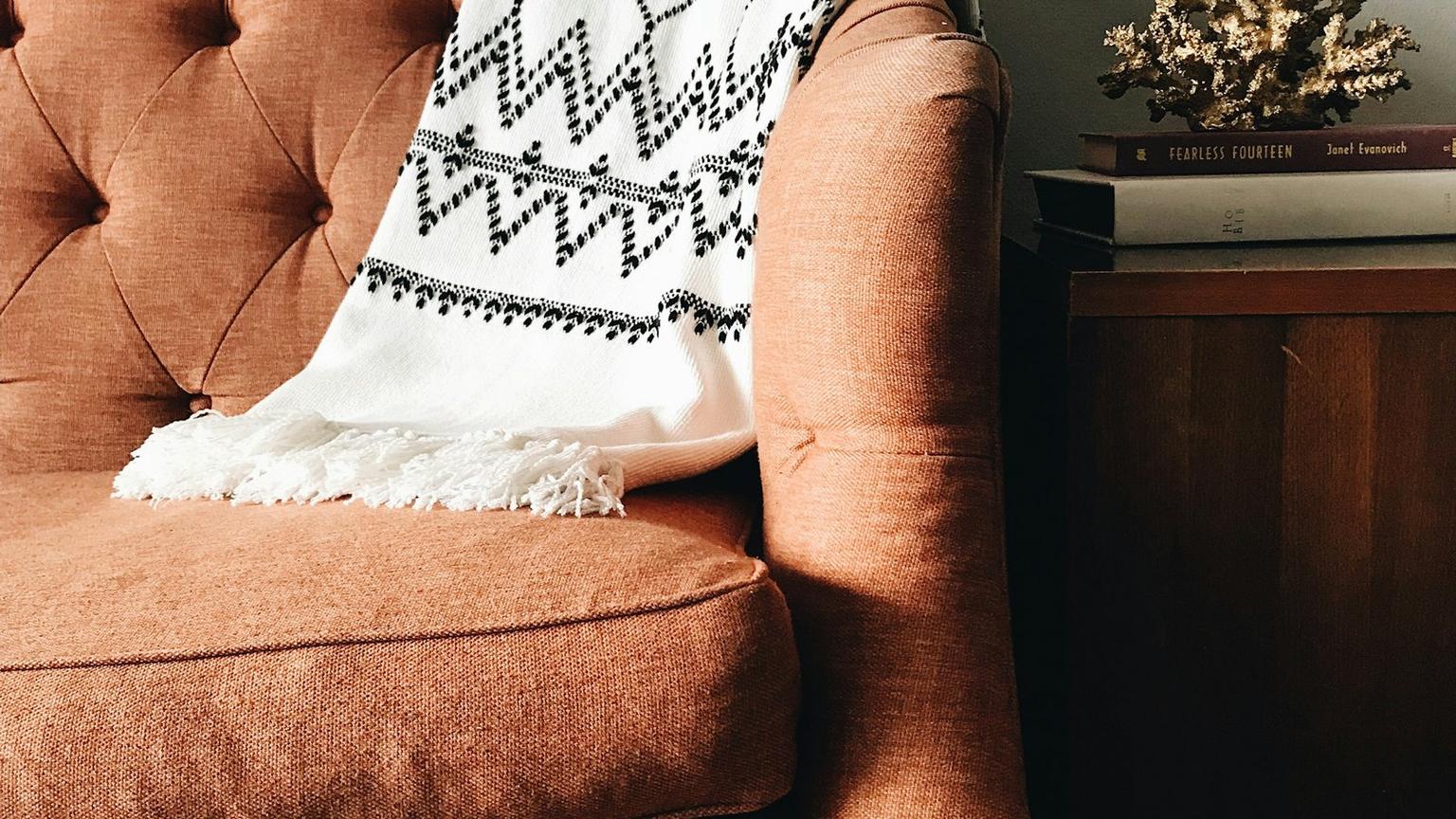
Sit on the left end of most family-room sofas and you'll find it: the cushion that's a little flatter than the others, a shade darker on the arm, faintly sour up where people rest their heads. Nobody spilled anything there. It just got used, every evening, for a couple of years.
That's how most couches lose their freshness: slow buildup in the places that get touched the most, and since fabric hides dirt so well, you notice the smell or the feel long before you see a stain.
Body oil, mostly
If we had to name one cause, it would be skin oil. Arms, the top edge of the back cushions, the headrest on a recliner: every time someone leans there, a little oil moves onto the fabric. On its own it's nearly invisible. The trouble is that oil holds dust, so those areas go dull, then darker, while the rest of the couch still looks fine.
Lotion, hair products, and a sweaty August afternoon add to it. Wiping with a damp rag mostly smears the oil around.
The favorite cushion
Every couch has one seat that does most of the work. Friction flattens the fibers there, crushed fibers catch the light differently, and that seat starts looking older than its neighbors. If your cushions are reversible, flipping and swapping them every few weeks evens out the wear.
Pets and crumbs
The dog's spot is easy to find. It's the one with hair worked into the seams and a smell that gets stronger on muggy days. Dogs carry in yard dirt and their own oils; cats claim one corner and never give it a day off.
Crumbs are the quieter problem. They slide down between the cushions into the deck underneath and sit there with the dust and anything sticky that came with them. Pull the cushions off once in a while. You'll find snacks you forgot you bought.
Store sprays make it worse
People are surprised by this one. Most fabric fresheners and foaming upholstery cleaners leave something behind, usually detergent or a fragrance carrier, and that film dries a little tacky. Tacky fabric picks up dirt fast. So the spot you treated looks better for a week, then looks worse than the cushion beside it, and out comes the spray bottle again.
Heavy fragrance covers a stale smell for an afternoon. The cause is still sitting in the fabric when it fades.
Signs it's time
- The room smells a little stale even after you've vacuumed and dusted.
- The arms or headrests look darker than the seat fronts.
- One cushion feels rough, heavy, or slightly sticky.
- Pet smell gets noticeably stronger when the air is humid.
- It looks fine from across the room and worse up close.
If you're nodding at most of that list, vacuuming has done what it can. A vacuum lifts loose dust and hair. It can't pull oil out of fibers or dissolve dried juice.
What a professional visit does
Your technician starts with the cleaning tag, usually stitched under a seat cushion. The letter on it sets the plan, and on an X-coded piece (vacuum only) the plan is a careful vacuuming and not much more, and you'll hear that before anything gets wet.
Next comes dry soil and hair. The whole piece gets vacuumed, seams and the deck under the cushions included, because wet grit just smears into the weave.
Then the oily zones get pre-treated: the arms, the headrest line, that favorite seat. Those need a few minutes with the solution before anything else happens. After that the fabric is cleaned with our low-moisture method, the loosened soil is pulled out, and the tech grooms the nap so microfiber and similar fabrics dry even.
Fast drying is a bigger deal on a couch than on carpet. Cushion foam holds water like a kitchen sponge, and a soaked cushion can stay damp inside for a day and come out smelling worse than it went in. Keeping the water low means you can sit on it again that afternoon.
Pet urine that has gone down into the foam is a different job. It needs an enzyme treatment (the same one behind our pet odor work on carpet), and in a bad case the foam itself may be past saving. We'll tell you which one you've got.
Between cleanings
Vacuum the couch weekly with the upholstery tool. Wash throws and pillow covers often, since they soak up smell and hand it right back. Blot spills; leave the scrubbing for grout. Put the spray bottle away. Most family couches do fine with a professional cleaning about once a year, sooner if there are small kids or a dog who thinks the sofa is his.
If yours has that heavy, tired feel, the upholstery cleaning page has the details and there's $25 off on the coupons page. When you call 843-536-9011, you can skip describing the bad cushion. We can probably guess.