
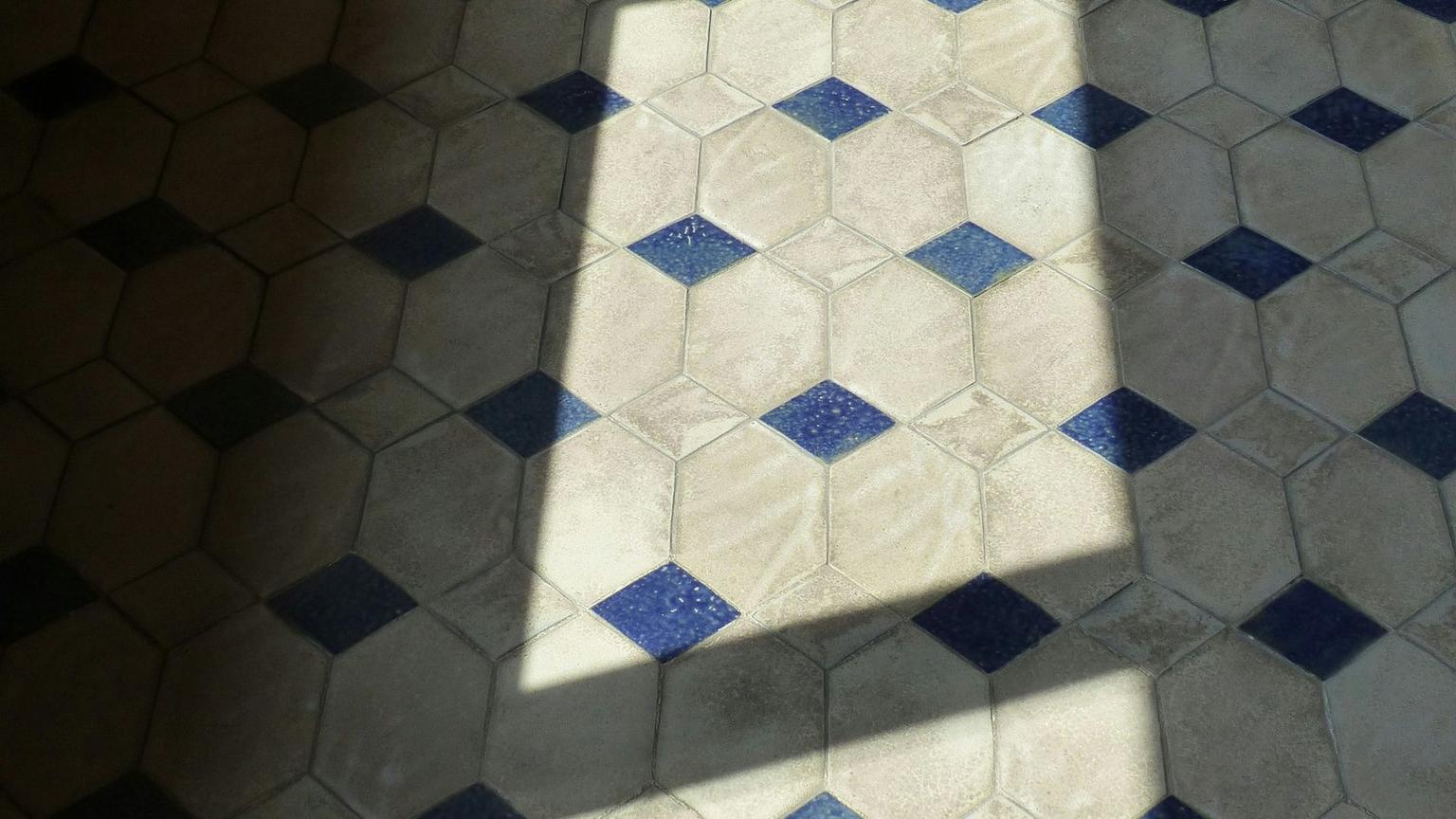
A 10-by-12 kitchen laid in 12-inch tile has a little over 200 feet of grout line. That's more than half a football field of narrow, rough-bottomed channels sitting a hair below the tile face, and every one of them catches whatever your mop leaves behind.
The tile itself is easy. Glazed ceramic and porcelain are smooth and barely absorb anything, so a damp cloth takes care of them. Grout is a different material entirely: cement, sand, and water, packed into the joints and left with tiny pores all through it. Liquid soaks in. Fine dirt settles into the texture. Grease from cooking finds it. Over a year or two the lines darken, light gray at first and eventually closer to the color of wet sand, and no amount of mopping brings them back.
Your mop is part of the problem
If we could change one habit in every house, it would be mopping grout with a dirty mop.
It sounds obvious, but think about how most of us mop. Fill a bucket, dunk, wring, go. By the third dunk the water is cloudy. By the end of the kitchen it's gray. Everything in that water gets spread across the floor, and since grout sits slightly lower than the tile, the dirty water runs off the tile and pools right in the joints. The tile dries looking clean. The grout dries holding a fresh layer of whatever was in the bucket.
Too much cleaner adds to it. Many floor soaps leave a film when they dry, and film is sticky. Dirt from shoes and paws grabs onto it, so the grout darkens faster after you clean than before. People notice that and use more soap. You can see where this goes.
The fix is boring. Sweep or vacuum first so the mop isn't pushing sand into the joints. Use less product than the bottle suggests. Change the water when it clouds, or use a spray bottle and flat microfiber pads you can swap out partway through. Wipe spills before they soak in, and put a mat at the back door.
Where it gets worst
Kitchens get grease and food spills on top of traffic, and the strip in front of the stove and sink is usually the darkest. Entryways and mudrooms take tracked-in grit plus water off wet shoes, which carries the grit right down into the joints. Laundry rooms collect detergent drips. Under the pet bowls you'll find a ring of splashed water and kibble dust.
Bathrooms are their own case.
The bathroom version: soap scum and hard water
Shower tile goes cloudy for a different reason than kitchen tile. Every shower leaves a thin film of soap, shampoo, conditioner, and body oil on the walls, and when the water evaporates it leaves its dissolved minerals behind too. One layer is invisible. A few weeks of layers is a dull haze on the tile and a gray, slightly slick band on the lower grout, where the runoff collects and the air barely moves. Corners and the floor of the shower stay wet longest and look worst.
You can slow it down a lot with two habits. Squeegee the walls after you shower, top to bottom; it takes under a minute and pulls off the water before it dries into film. Then run the exhaust fan during the shower and for a while after, with the door or curtain open so the stall can dry. Florence summers are humid enough that a closed-up bathroom can stay damp half the day, and damp surfaces are where scum builds.
When you do clean, go gentle. Harsh scrubbing pads scratch some tile finishes and wear the surface of the grout itself. Acidic cleaners will cut mineral spots, but repeated use eats at cement grout and can etch natural stone, so check what your tile is before you reach for one. Never mix cleaners. And if a weekly wipe with a mild, tile-safe product isn't keeping up, scrubbing harder won't either.
What gets it out
Once the dirt is down in the pores, you need agitation that reaches into the joint, and a mop just glides over the top. Hand-scrubbing with a grout brush works on a small bathroom floor if you have the knees and the afternoon for it. On a whole kitchen, it's a lot.
Our tile and grout cleaning uses a machine buffer. The tech looks over the floor with you first, pre-treats the dark lines and greasy spots, then runs the buffer across the tile so its scrubbing action works the buildup up and out of the grout lines. The loosened soil gets cleaned off the floor, and you can see the difference line by line as it goes. If you want to read more about how the buffer method compares to other ways of cleaning grout, our tile and grout sister site gets into the details.
Cleaning removes dirt and grease film, and that's where it stops. It won't fix grout that's cracked or crumbling, or grout stained by something that has changed the color of the cement itself, and some very old stains only lighten. We'll tell you which is which when we look at it.
There's $45 off tile on the coupons page, and if you want a second opinion first, the contact form is a fine place to describe your worst spot.